
How TFI Used Sense to Bring Visibility to an Old-School Machine Shop
A New Chapter for a 30-Year-Old Machine Shop
When Aashay Kumar purchased Tri-Form, Inc. (TFI) in August of 2024, he stepped into a business with nearly three decades of manufacturing history and a shop floor that ran largely on experience and intuition.
Founded in 1995 in the Pittsburgh region, TFI built its reputation on quality work, reliable delivery, and customer-focused service. Over time, the company expanded its machining capabilities while maintaining the practical, hands-on approach that defined it from the beginning.
Kumar arrived with a different professional background. Before acquiring TFI, he worked in technology and operations, first as a software engineer and later as a Senior Manager of Strategy and Operations at McMaster-Carr, an industrial distributor known for its operational discipline.
As he began learning the flow of the shop, Kumar saw an opportunity to complement the team's manufacturing expertise with better operational visibility. The goal was not to replace the experience already present on the shop floor, but to give the team clearer information about how machines were being used so they could make decisions with more context.
The Challenge
“We were an old-school shop and didn't have much visibility into what was happening on the shop floor unless we were physically there. Sense has changed that by giving us real-time machine visibility, allowing us to understand utilization and performance without having to constantly walk the floor.”
— Aashay Kumar, Owner and President, TFI
The team relied primarily on observation and experience to understand how machines were performing. While this approach worked, it made it difficult to answer simple operational questions with confidence:
- How long were machines actually running each day?
- Were machines being underutilized?
- Were there hidden inefficiencies during shifts?
The concept of machine monitoring wasn't new to TFI. But many available systems came with significant barriers: large upfront investments, long-term contracts, and complex implementations that risked production disruption. For a shop focused on keeping machines running, those hurdles made adoption difficult.
The Turning Point
TFI first encountered Sense when the Sense team visited shops in the Pittsburgh region. What stood out to Kumar was how different Sense felt compared to traditional monitoring systems. Instead of requiring a major rollout, long-term commitment, or expensive infrastructure, the system could be deployed quickly on just a few machines.
“This felt like an economical solution and a low barrier to entry.”
— Aashay Kumar, Owner and President, TFI
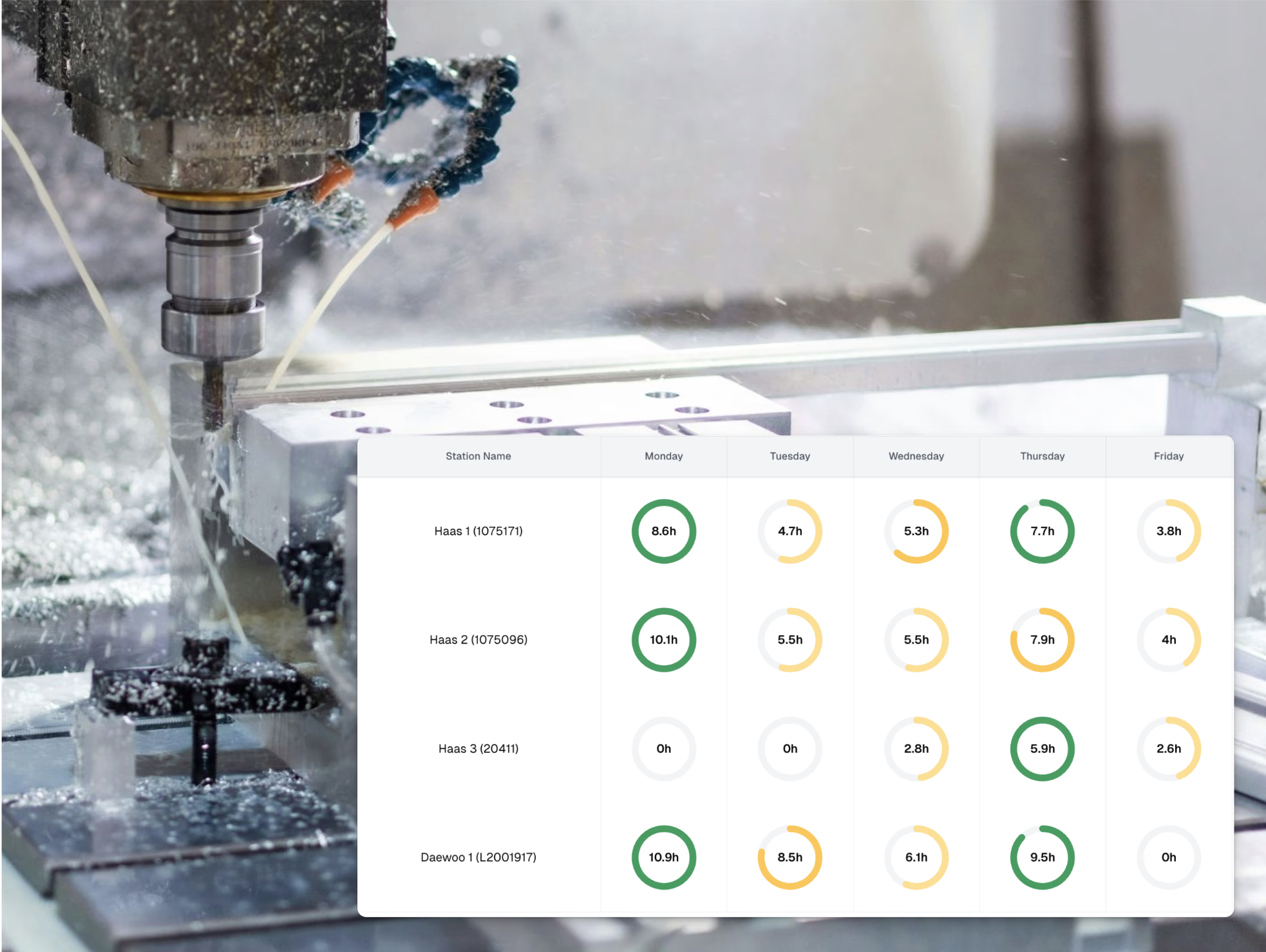
Rather than rushing into a full deployment, TFI started with a pilot. Four machines were equipped with sensors to test the platform. Installation was fast and scheduled to avoid disrupting production. Within a few hours, all four machines were live on the Sense platform.
The Response
Introducing monitoring technology into a shop environment can sometimes create hesitation, and TFI experienced a bit of that early on. Some employees initially wondered whether the system might be used to track individual performance. Kumar addressed those concerns directly.
“We were transparent about it. This isn't about tracking people — it's about helping us tell better stories about how our days and weeks actually go in the shop.”
— Aashay Kumar, Owner and President, TFI
As the team began reviewing the data during weekly production meetings, the system quickly became part of their workflow.
“If the data doesn't match what we expected, we dig into it. It's helping us identify opportunities and act on it.”
— Aashay Kumar, Owner and President, TFI
The Result
Today, Sense has become part of TFI's operational rhythm. Each week, the owner, production manager, and shop foreman review machine uptime reports as part of their production planning discussions.
“We're about two to three months in right now, but we're starting to see data that we can actually act on. As we're drilling into off-hours, we're seeing that machines may have been left on too long or aren't running as efficiently as they should be.”
— Aashay Kumar, Owner and President, TFI
TFI plans to use Sense to establish machine utilization benchmarks as more data accumulates. The impact has been strong enough that Kumar now recommends the same approach to other manufacturers.
“I would recommend it to another shop 100%. Start with a few sensors across a few machines first so you get good data and control your variables.”
— Aashay Kumar, Owner and President, TFI
TFI is already planning to expand beyond the initial pilot deployment. Where the shop once relied primarily on observation, it now has real data guiding conversations about machine utilization and productivity. Sense didn't replace the experience of the shop floor; it added the data needed to act on it.
Sense in your shop, risk-free.
90-day pilot. 5+ units. 100% money-back guarantee on your first order.