
How Sense Revealed Warning Signs Before a $50,000 Stamping Press Failure
One of Sense's customers, a mid-size manufacturer in the midwest, has been producing HVAC components and machinery for more than 50 years. They run fabrication, stamping, tube bending, assembly, and warehousing continuously to support major equipment manufacturers across the country.
When they first installed Sense, they started with a three-device pilot to understand what real-time machine monitoring would look like on a busy production floor. A few weeks in, one of their fin-stamping presses failed.
The Challenge: A Major Machine Failure
The press required a full rebuild at a cost of $50,000. Beyond the repair bill, the failure caused months of downtime and forced production onto other equipment that was already running near capacity.
One of the Sense pilot devices had been installed on that press when it failed. The system had been recording the entire time, but real-time notifications had not yet been enabled. The data was there, but no one had been watching it.
The Turning Point: Signals Were There in Advance
After the breakdown, the company's CFO logged into the Sense dashboard to understand what had happened. What he found was not a sudden event but a measurable pattern that had been developing for days.
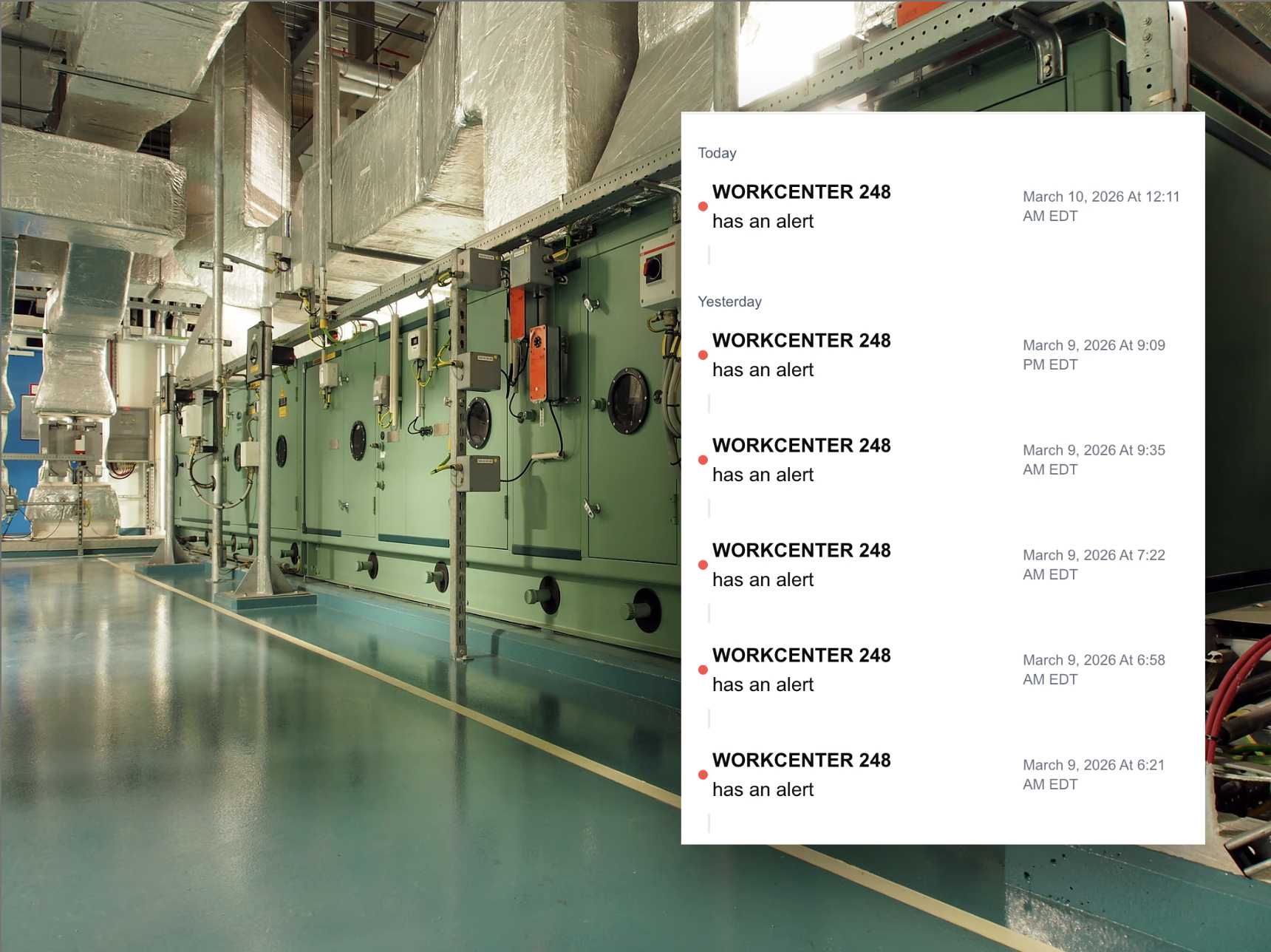
Sense continuously tracks vibration and power draw to build a baseline of normal operation for each machine. When readings drift outside that profile, the platform flags it. In the days before the failure, both power and vibration on the fin press had been climbing. Sense had recognized those anomalies and generated alerts, because the readings no longer matched the machine's typical behavior. The press had not failed without warning. It had been drifting toward failure.
“The fin press had a major failure that will require a rebuild… The Sense report shows that it started alerting recently for vibration and power. Perhaps a notification would have triggered a maintenance inspection… Had we known the value of Sense, it could have been prevented.”
— CFO, Midwest HVAC Manufacturer
No monitoring platform guarantees prevention. But the data confirmed that measurable warning signals were present before the breakdown, and that Sense had caught them.
The Response: From Pilot to Full-Shop Expansion
In the weeks that followed, the company expanded from three Sense devices to eighteen, covering the entire shop floor. They prioritized critical machines first, particularly those that had absorbed additional load while the fin press was offline.
The device from the damaged press was redeployed to another machine during the rebuild, so monitoring continued without interruption. Because Sense is machine-agnostic, it can move between assets without painstaking reconfiguration or setup fees.
The team also plans to enable real-time notifications so that abnormal vibration and power trends reach operations leaders as they develop, not after the fact.
The Result: Early Warning in Practice
The fin press failure cost $50,000 in repairs and months of lost production. It also changed how the team approaches machine monitoring. The breakdown was not sudden. Vibration and power had been drifting from normal before anything gave way, and the signals were there to see.
Now, when a machine moves outside its normal operating profile, the team will have time to inspect and respond before a failure occurs. Expanding from three devices to eighteen came from seeing that proof firsthand: machines give warning before they fail, and the data that surfaces failure risk helps with day-to-day decisions too.
“It was a hard lesson for the team, but now that we have a very real-world proof of concept, we should see very good acceptance of the Sense platform.”
— CFO, Midwest HVAC Manufacturer
Sense in your shop, risk-free.
See if you qualify for a money-back guarantee on hardware for your first order.